
What is Yunnan Cuisine and Why is it Unlike Any Other Chinese Food in America
When most Americans think of Chinese food, a familiar set of dishes comes to mind. Cantonese dim sum. Sichuan mapo tofu. Peking duck. These are extraordinary cuisines, each with centuries of history behind them. But they represent only a fraction of what China's incredibly diverse culinary landscape has to offer.
In the southwest corner of China, tucked against the borders of Vietnam, Laos, and Myanmar, lies a province that has been quietly producing some of the most exciting, layered, and distinctive food in the entire country for thousands of years. That province is Yunnan, and most Americans have never heard of its cuisine.
At Yunnan By Potomac, we have spent years working to change that. Here is everything you need to know about Yunnan cuisine and why it is unlike anything else you will find on a Chinese menu in Northern Virginia or anywhere else in the United States.
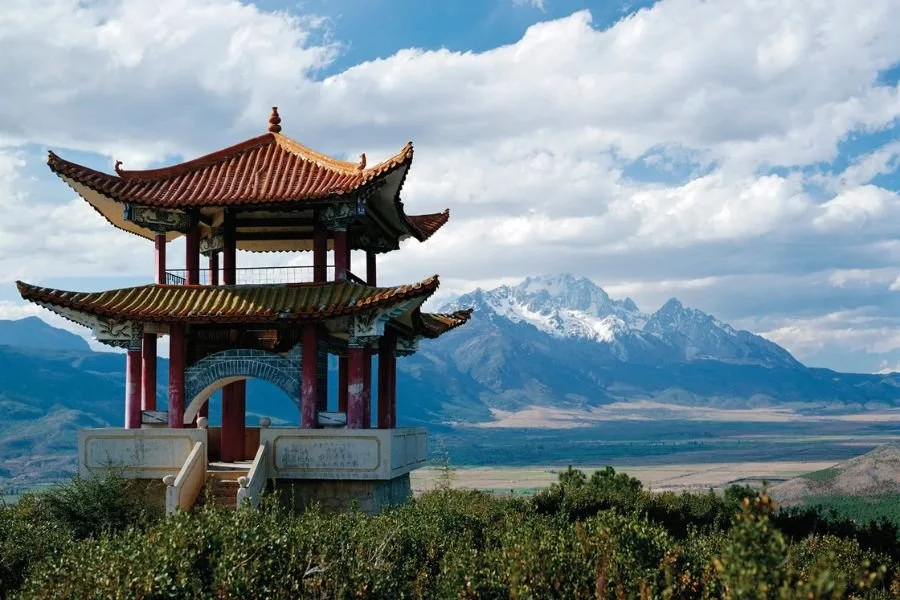
Where is Yunnan and Why Does Geography Matter?
Yunnan province in southwest China is defined by its colorful ethnic minority groups, picturesque landscapes, and extraordinary biodiversity. It sits at a remarkable geographic crossroads, bordered by Southeast Asia to the south and west, Tibet to the north, and Sichuan to the northeast. Landlocked and sitting on a plateau almost two kilometers above sea level, Yunnan draws culinary influences from its neighbors including Vietnam, Laos, Burma, and Sichuan.
This geography is everything when it comes to understanding why Yunnan cuisine tastes the way it does. Unlike the coastal provinces of China whose cuisines developed around seafood and trade routes, Yunnan developed in relative isolation, drawing from the mountains, forests, rivers, and the extraordinarily diverse communities that called them home.
A Cuisine Shaped by 25 Ethnic Minority Groups
This is perhaps the single most important thing to understand about Yunnan food, and the thing that most distinguishes it from every other regional Chinese cuisine you may have encountered.
Yunnan cuisine is an amalgam of the cuisines of Han Chinese and other ethnic minority groups in Yunnan province. As the province with the largest number of ethnic minority groups, Yunnan cuisine is vastly varied and it is difficult to make generalizations.
There are 25 ethnic minorities in Yunnan and each nationality has their own unique food culture. Yunnan cuisine features the ethnic eating habits, cooking wares, cooking methods, and unique tastes of these communities. The ancient cooking methods of these groups have been merging with the techniques of the Han majority for centuries, creating something that is genuinely unlike any other regional cuisine in China.
When you sit down at Yunnan By Potomac, you are not eating the food of one culture. You are eating the living result of thousands of years of culinary exchange between dozens of communities across one of the most biologically and culturally diverse places on earth.
What Does Yunnan Food Actually Taste Like?
If you have eaten Cantonese food and expected Yunnan to be similar, you are in for a surprise. If you have eaten Sichuan and braced for overwhelming heat, you will be surprised in a different way.
Yunnan cuisine sits somewhere between Sichuan food and the ethnic minority cuisines of the region. While there is some spiciness, the heat is generally moderate and not overpowering. The flavors are fresh and tender, with a delicate fragrance, and a sour and hot balance. Yunnan cuisine strives to preserve the original characteristics of its source ingredients.
What that means in practice is a cuisine built on brightness and balance rather than intensity for its own sake. Sour notes from pickled vegetables and plum vinegar. Warmth from chili that builds gradually rather than hits immediately. Fresh herbs including mint, lemongrass, and coriander that cut through richness and keep every bite feeling alive. And an extraordinary range of textures, from silky rice noodles to the satisfying chew of wood ear mushrooms to the crackling exterior of skewered barbecue.
It is food that is bold without being aggressive, complex without being fussy, and deeply satisfying in a way that makes you want to go back to the beginning of the menu and start again.
The Ingredients That Make Yunnan Unique
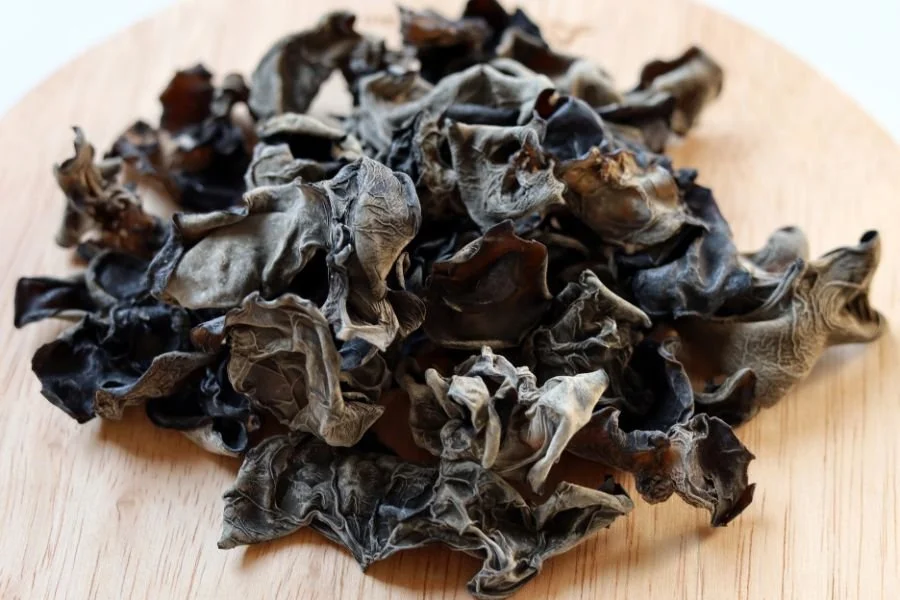
One of the most distinctive ingredients associated with Yunnan is its wild mushrooms. More than 5,000 types of mushroom can be found in Yunnan, nicknamed the kingdom of mushrooms, thanks to the province's regular rainfall and mild temperatures. Of those, 500 species are edible.
At Yunnan By Potomac, our Wood Ear and Mint Salad is a direct expression of this tradition. Wood ear mushrooms have a satisfying, almost crunchy texture and a mild, earthy flavor that pairs beautifully with the brightness of fresh mint and a clean vinegar dressing. It is one of the most distinctive dishes on the menu and one of the first things we recommend to guests who have never tried Yunnan food before.
Beyond mushrooms, Yunnan is uniquely known in China for its cheeses including Rubing and Rushan, made by the Bai people, its renowned Pu'er tea, and its Xuanwei ham which is often used to flavor stewed and braised dishes and for making rich broths and stocks. Yunnan is also one of the few places in China with a true cheesemaking tradition, a detail that consistently surprises guests who assume all Chinese cuisine is dairy-free.
Yunnan and the Cuisines of Southeast Asia
One of the most fascinating aspects of Yunnan food for American diners is how familiar certain elements feel, but in an unexpected way.
The cuisine of Yunnan is often compared to the cuisine of Southeast Asia as the province borders the region and many of the ethnic minorities or related cultural groups also have a presence in Southeast Asia. Among the ethnic groups that shape Yunnan cuisine, the Dai people stand out for their deep commitment to food culture. The Dai people of Yunnan belong to the larger Tai-speaking ethnic family, which includes the Thai people of Thailand and the Lao people of Laos.
This means that if you have ever loved Thai food or Vietnamese cuisine, there is something familiar waiting for you in Yunnan cooking. The use of lemongrass, fresh herbs, bright acidic sauces, and rice as a foundation rather than wheat all echo the flavors of Southeast Asia. But the influence of Sichuan and Han Chinese cooking methods, and the extraordinary diversity of Yunnan's own ethnic communities, make the result something entirely its own.
Why Yunnan Cuisine is Still Underrepresented in America
Given how extraordinary Yunnan food is, you might wonder why it has taken so long to arrive on American tables. The answer is partly historical and partly geographic.
Chinese immigration to the United States was driven largely by communities from Guangdong province in the south, which is why Cantonese cuisine became the face of Chinese food in America for most of the twentieth century. Later waves brought Sichuan and Hunan cooking to wider attention. But Yunnan, landlocked and geographically isolated even within China, has only recently begun to gain the recognition it deserves, first in major Chinese cities like Beijing and Shanghai, and now gradually in food-forward American cities.
At Yunnan By Potomac, we believe Northern Virginia and the DMV area are ready for it. The region's extraordinary diversity, its openness to global culinary traditions, and its growing community of diners who actively seek out authentic and underrepresented cuisines make it exactly the right place to bring the flavors of Southwest China to a new audience.
What to Expect When You Dine at Yunnan By Potomac
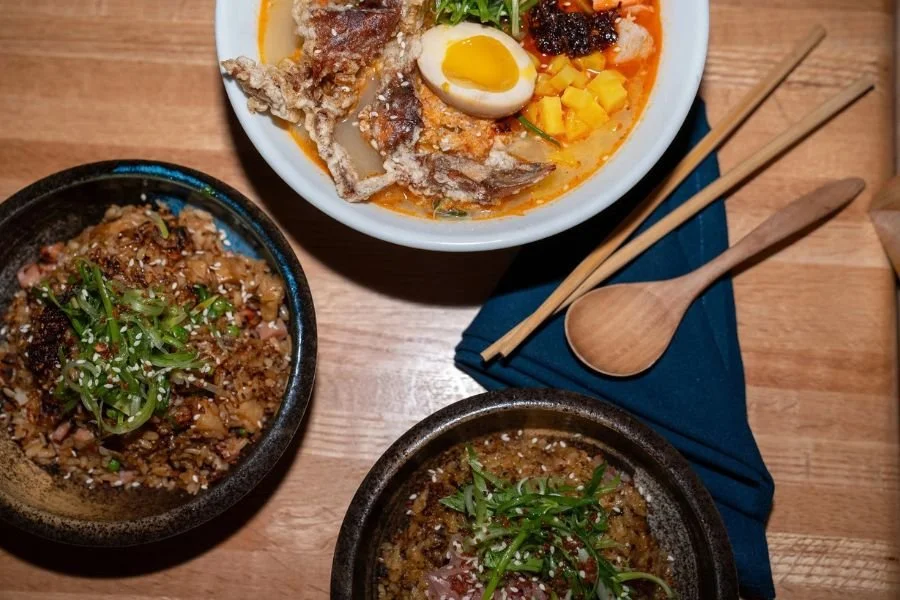
Our menu is built to take you on a journey through the flavors of Yunnan, beginning with the soul of the cuisine: Mixian rice noodles. These silky, gluten-free noodles served with rich broths and complex sauces are the dish that defines Yunnan food above all others, and our Norwegian King Crab Mixian represents our most elevated interpretation of the tradition.
Alongside the noodles you will find hand-folded Jiaozi dumplings, night market-style Shaokao barbecue, crispy Bao buns, and a rotating selection of Xiaochi small plates that reflect the seasonal and communal spirit of Yunnan cooking. Every dish is made from scratch using premium ingredients, and every table is designed to be shared.
If you have never tried Yunnan cuisine before, your first visit to Yunnan By Potomac is the beginning of something you did not know you were missing.
We are open now at 721 15th St S, Unit 150 in Pentagon City, Arlington, and coming soon to Reston Town Center in 2026. Reserve your table at yunnanbypotomac.com.